
Where to Buy USDC: 7 Safe Ways to Get Digital Dollars
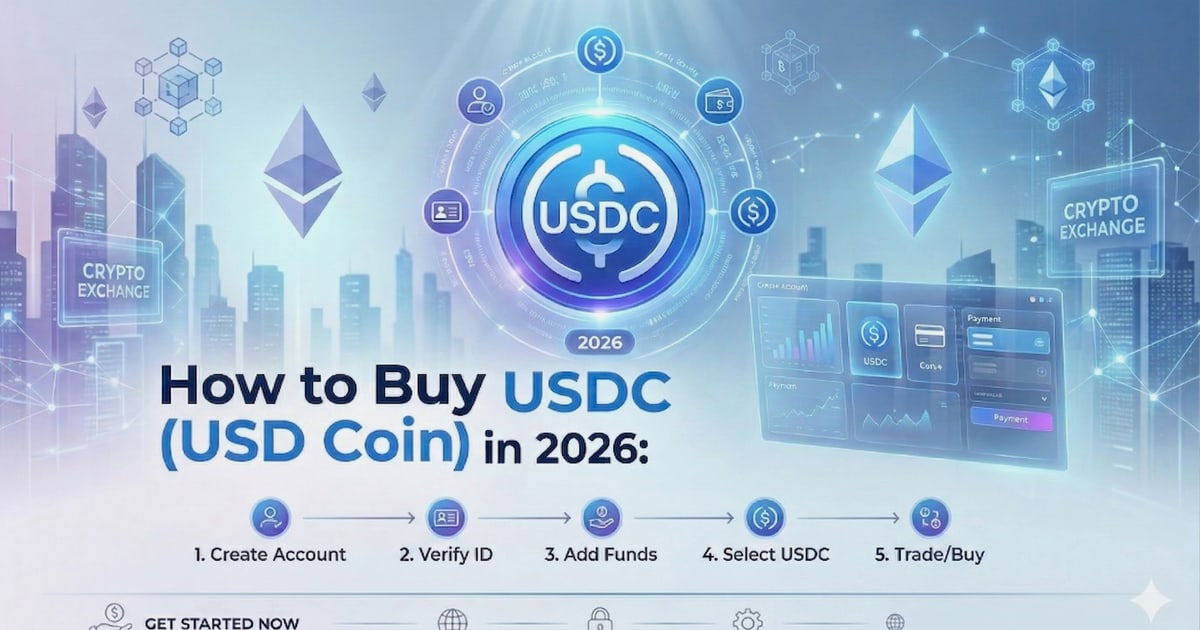
Where to Buy USDC: Safe, Low-Fee Options Compared
USDC has become one of the most widely used digital dollars on the planet. Issued by Circle and backed one-to-one by cash and cash equivalents, it offers a predictable way to hold dollar value on a blockchain without the volatility of assets like Bitcoin or Ethereum. But before you can send, spend, or save with USDC, you need to acquire it — and the route you choose affects your fees, speed, security, and control.
This guide walks through the most practical ways to buy USDC in 2026, compares the trade-offs, and points out which methods make sense for different goals — from casual holding to running business expenses on a crypto corporate card.
What Is USDC and Why Buy It?
Where to Buy USDC: 7 Safe Ways to Get Digital Dollars - What Is USDC and Why Buy It?.
USDC is a fully reserved stablecoin pegged to the US dollar. Every token in circulation is backed by an equivalent dollar or short-term cash-equivalent asset held in Circle's publicly reported reserves, with monthly attestations from a Big Four accounting firm. That transparency is a core reason many people choose USDC over other stablecoins when they want predictable value and a clear redemption path.
Common reasons to buy USDC include:
- Cross-border payments — transfers settle in seconds and often cost fractions of a cent, regardless of destination.
- On-chain savings and DeFi — USDC is widely accepted in lending protocols and yield strategies.
- Trading — it serves as a stable quote asset on most major exchanges.
- Business spending — crypto-native companies use USDC to fund virtual cards for SaaS subscriptions, ad spend, and team expenses.
Before you buy, decide whether you want to hold USDC in a custodial account (an exchange controls the keys) or a self-custody wallet (you control the keys). That single decision shapes every step that follows.
Option 1: Buy USDC on a Centralized Exchange
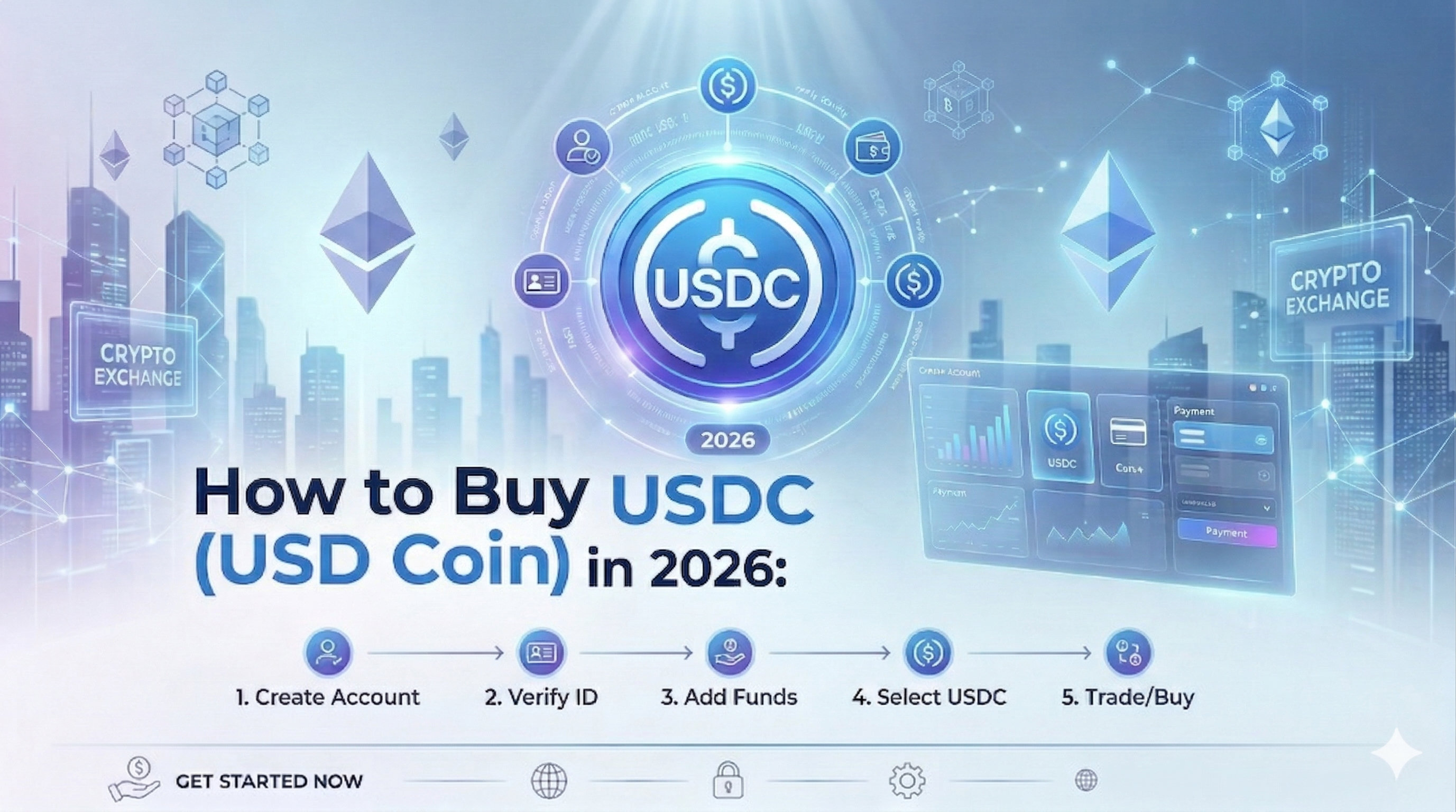
Where to Buy USDC: 7 Safe Ways to Get Digital Dollars - Option 1: Buy USDC on a Centralized Exchange.
Centralized exchanges remain the most common entry point for first-time buyers. They accept traditional payment methods, offer deep liquidity, and simplify the process of converting fiat into USDC.
Coinbase
Coinbase is one of the most straightforward places to buy USDC with a bank account, debit card, or wire transfer. Since Circle and Coinbase co-founded the Centre Consortium that originally governed USDC, the integration is tight. USDC purchases with USD on Coinbase are typically fee-free when you use ACH transfers, though card purchases carry higher costs.
Binance
Binance offers USDC trading pairs against dozens of fiat currencies and cryptocurrencies. Fees are competitive, and the platform supports multiple payment rails depending on your region. If you already hold other crypto, swapping to USDC on Binance is fast and inexpensive.
OKX
OKX provides USDC onramps and trading pairs alongside a broad Web3 ecosystem. It's a solid option if you want to move between centralized trading and on-chain activity without leaving the same platform family.
Best for: First-time buyers, large purchases, and anyone who plans to trade frequently.
Trade-off: The exchange holds your USDC in a custodial wallet. You don't control the private keys, and withdrawals may be subject to limits or review.
Option 2: Buy USDC Directly in a Self-Custody Wallet
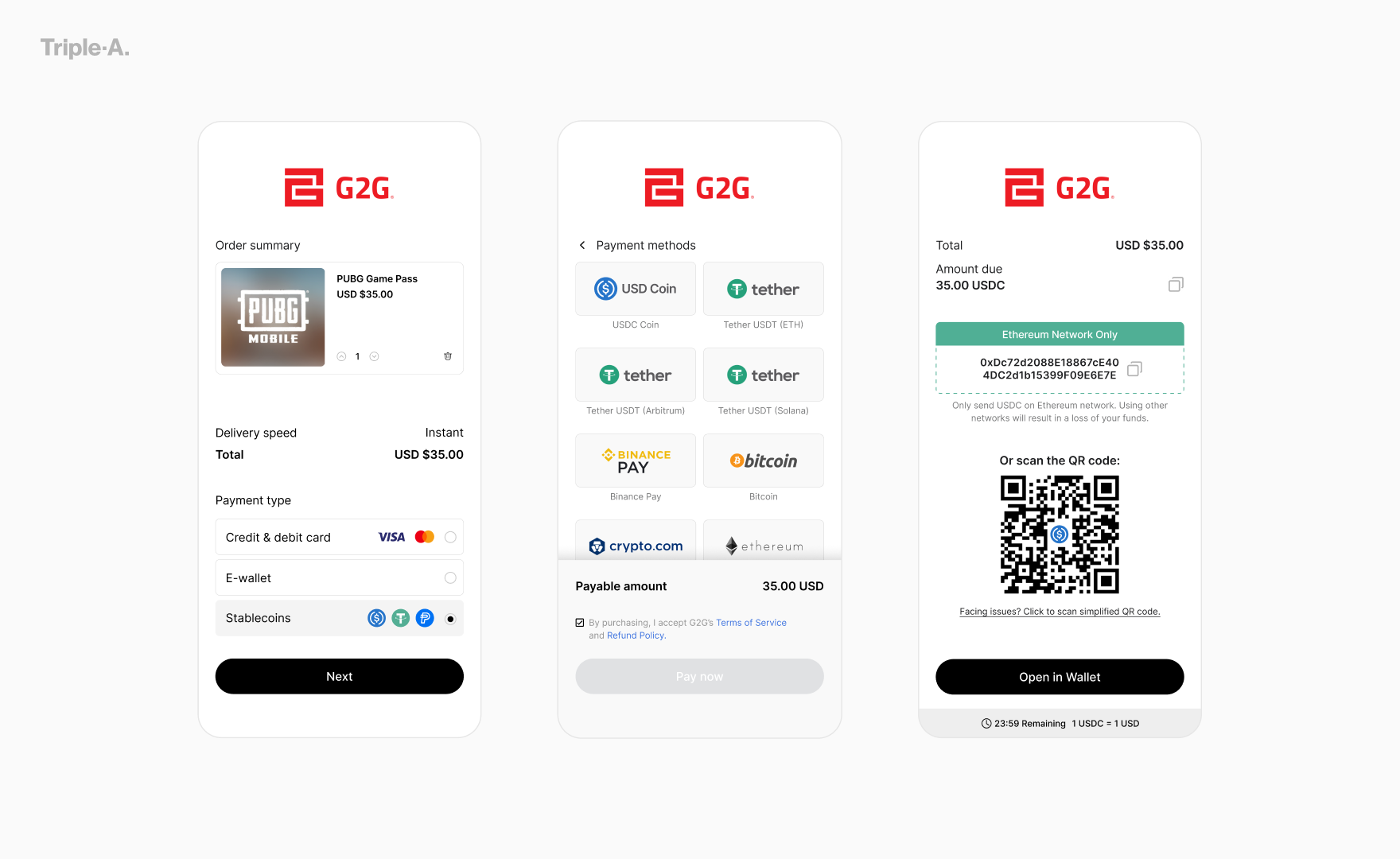
Where to Buy USDC: 7 Safe Ways to Get Digital Dollars - Option 2: Buy USDC Directly in a Self-Custody Wallet.
If you want full control from the moment of purchase, buying USDC inside a non-custodial wallet is the cleaner path. The coins land directly at an address you control, with no exchange account involved.
MetaMask
MetaMask lets you buy USDC with a debit card, credit card, bank transfer, Apple Pay, Google Pay, or PayPal — depending on your region. The wallet aggregates quotes from multiple regulated onramp providers so you can compare rates before confirming. Purchases start around $1–$5, and USDC arrives directly in your wallet on networks including Ethereum, Solana, and Polygon.
This method removes the withdrawal step entirely. You buy and hold in the same place, which reduces exposure to exchange freezes or withdrawal delays.
Best for: People who want self-custody, plan to use DeFi, or need to fund a wallet that isn't tied to a centralized platform.
Trade-off: Onramp provider fees can be higher than exchange ACH rates, especially for card purchases.
Option 3: Buy USDC Through a Fintech App or Neobank

Where to Buy USDC: 7 Safe Ways to Get Digital Dollars - Option 3: Buy USDC Through a Fintech App or Neobank.
Several fintech platforms now offer USDC as part of a broader digital finance experience. These apps blend traditional banking features with stablecoin access, making them appealing if you want one dashboard for fiat and crypto.
Availability varies significantly by country and regulatory status. Check whether the app supports USDC purchases in your jurisdiction before signing up.
Best for: Users who already manage money through a fintech app and want incremental crypto exposure without opening a separate exchange account.
Option 4: Peer-to-Peer Marketplaces
P2P platforms connect buyers and sellers directly, often supporting local payment methods that exchanges don't cover — bank transfers, mobile money, or even cash in some regions. Escrow systems hold the USDC until the seller confirms payment.
Best for: Regions with limited exchange access or users who need specific local payment rails.
Trade-off: P2P carries counterparty risk. Always use the platform's escrow, check seller ratings, and avoid deals that move off-platform.
Option 5: Receive USDC as Payment
You don't always have to buy USDC. If you freelance, run a business, or work with crypto-native clients, you can invoice in USDC and receive it directly to your wallet. This bypasses onramp fees entirely and is increasingly common in global contractor arrangements.
Best for: Freelancers, remote workers, and businesses with crypto-paying clients.
Option 6: Swap Other Crypto for USDC
If you already hold ETH, SOL, or another liquid asset, swapping to USDC on a decentralized exchange (DEX) or through a wallet's built-in swap feature is often the fastest route. You'll pay network gas fees plus a small swap fee, but there's no fiat onramp involved.
Best for: Existing crypto holders who want to rotate into a stable asset without touching a bank account.
Option 7: Use a Crypto Corporate Card Platform
For businesses that already hold USDC or USDT, buying the stablecoin is only half the equation. The next question is how to spend it. That's where corporate crypto card platforms come in.
Cardfornia is a Singapore-based platform that lets companies fund a single account with USDC or USDT and issue multi-currency virtual cards to teams at scale. Instead of converting stablecoins to fiat manually for every SaaS subscription or ad campaign, businesses can spend USDC directly through cards that work with platforms like Meta Ads, Google Ads, AWS, and ChatGPT.
This approach matters because it changes the calculus of where to buy USDC. If your goal is operational spending — not speculation — you may not need an exchange account at all. You can receive USDC from clients or treasury, move it to a spending platform, and put it to work immediately. Cardfornia keeps client funds in segregated accounts with third-party licensed custodians, never lending or investing them, which addresses a common concern for businesses holding stablecoin balances.
For a step-by-step walkthrough of setting up a corporate crypto card with USDC funding, see the Cardfornia tutorial.
How to Choose the Right Method
The best place to buy USDC depends on four factors:
| Factor | Exchange | Self-Custody Wallet | Fintech App | P2P | Corporate Card Platform |
|---|---|---|---|---|---|
| Control over funds | Low | High | Medium | Medium | Medium |
| Fees | Low (ACH) | Medium–High | Medium | Varies | Varies |
| Speed | Fast | Fast | Medium | Varies | Fast |
| Best use case | Trading, large buys | DeFi, self-custody | Everyday finance | Local payments | Business spending |
If You Want the Lowest Fees
Use a centralized exchange with ACH or SEPA transfers. Coinbase offers zero-fee USDC purchases with USD via bank transfer in supported regions. Avoid card purchases unless speed matters more than cost.
If You Want Full Control
Buy directly in a self-custody wallet like MetaMask. You'll pay slightly more in onramp fees, but you eliminate custodial risk and withdrawal friction.
If You're Buying for Business Expenses
Skip the retail onramp and think about the full workflow. If your company receives USDC as revenue or holds it in treasury, a platform like Cardfornia lets you spend that balance directly on ads, SaaS, and team cards — without converting to fiat first. This is especially relevant for crypto-native startups that want to avoid the operational overhead of manual conversions.
Common Mistakes to Avoid
Buying on the Wrong Network
USDC exists on multiple blockchains — Ethereum, Solana, Polygon, Base, Arbitrum, and others. Sending USDC to an address on the wrong network can result in lost funds. Always confirm the network before confirming a purchase or withdrawal.
Ignoring Withdrawal Fees
Some exchanges charge significant fees to withdraw USDC, especially on Ethereum where gas costs fluctuate. Check the withdrawal fee before you buy, not after.
Overlooking Card Fees
Credit and debit card purchases often carry 3–5% fees from the onramp provider. If you're buying a large amount, a bank transfer will almost always be cheaper.
Confusing USDC with Other Stablecoins
USDC, USDT, and DAI are all dollar-pegged, but they have different issuers, reserve structures, and regulatory profiles. If transparency and regulated backing matter to you, understanding what USDC is helps you make an informed choice.
Related reading
- Reduce Ad Account Ban Risk: 11 Proven Prevention Tactics - Learn why Meta and Google disable ad accounts and how to reduce ban risk with policy compliance, payment hygiene, account warm-up, and stable card infrastructure.
- Sparados Review: Virtual Cards & Spend Control Tested - Evidence-based Sparados review covering virtual corporate cards, EUR/USD/CHF payments, expense workflows, pricing signals, setup, and who should use it.
- Banqa Review: Self-Custody Crypto Card Tested - Evidence-based Banqa review covering the self-custody Visa Infinite card, USDC collateral, fees, setup, business features, and who should actually use it.
Sources and further reading
- USDC | The world’s largest regulated digital dollar - Send, spend, save, and trade with a fully reserved stablecoin. Trusted by millions, issued by Circle.
- Buy USDC - USDC Price Today, Live Charts and News - Robinhood - USDC was developed to represent a US Dollar equivalent on the blockchain, and is used to transfer money globally between people and businesses without the need ...
- How to Buy USDC (USDC): Step-by-Step Guide - Learn how to buy USDC (USDC) with our step-by-step guide. Set up your wallet, and purchase USDC safely. Current price: $1.
FAQ
Is USDC always worth $1?
USDC is designed to maintain a 1:1 peg with the US dollar, and Circle redeems USDC at that rate. Brief deviations of a fraction of a cent can occur during extreme market stress, but the peg has historically recovered quickly.
Can I buy USDC without KYC?
Most regulated onramps require identity verification. Some DEX swaps from existing crypto don't require KYC, but fiat-to-USDC purchases through compliant providers almost always do.
What's the minimum amount of USDC I can buy?
On platforms like MetaMask, minimums depend on the onramp provider — many support purchases starting around $1–$5. Exchanges may have higher minimums for certain payment methods.
How long does it take to receive USDC after buying?
Card purchases typically settle in minutes. Bank transfers can take 1–3 business days depending on the provider and region. On-chain delivery after payment confirmation is usually near-instant.
Can businesses use USDC for everyday expenses?
Yes. Platforms like Cardfornia let businesses fund virtual cards with USDC and spend on advertising, SaaS subscriptions, cloud services, and travel — bridging stablecoin holdings with real-world vendor payments.
Is USDC safer than USDT?
USDC's reserve composition is more transparent, with monthly attestations from a major accounting firm and a regulatory framework under Circle. USDT has faced more scrutiny over its reserve disclosures. Neither is risk-free, but USDC's transparency is a differentiator for many buyers.
Conclusion
Where you buy USDC should match what you plan to do with it. Retail buyers who want low fees and trading flexibility will find centralized exchanges hard to beat. Users who prioritize self-custody and DeFi access should buy directly in a non-custodial wallet. And businesses that hold stablecoins for operational spending should evaluate platforms that let them use USDC without constant fiat conversion.
The common thread across all methods: verify the network, compare fees before committing, and understand who controls the private keys. USDC's value proposition is predictability — make sure your purchase method preserves it.
For more on how stablecoin-backed cards reduce ad account risk and streamline digital advertising spend, see our guide on paying for ads with crypto cards.