
What Is USDC? The Regulated Digital Dollar Explained
What Is USDC? The Regulated Digital Dollar Explained
USDC, or USD Coin, is a stablecoin designed to hold a 1:1 value with the US dollar. It is issued by Circle, a regulated financial technology company, and backed by cash and cash-equivalent assets held in publicly reported reserves. Unlike volatile cryptocurrencies such as Bitcoin or Ether, USDC is built for payments: predictable value, fast settlement, and access across dozens of blockchain networks.
For individuals, USDC offers a way to move dollar value globally without traditional banking delays. For businesses, it has become a practical treasury and operating-expense tool, especially for crypto-native companies that need to pay for software, advertising, and services without converting back to fiat at every step.
How USDC Works
What Is USDC? The Regulated Digital Dollar Explained - How USDC Works.
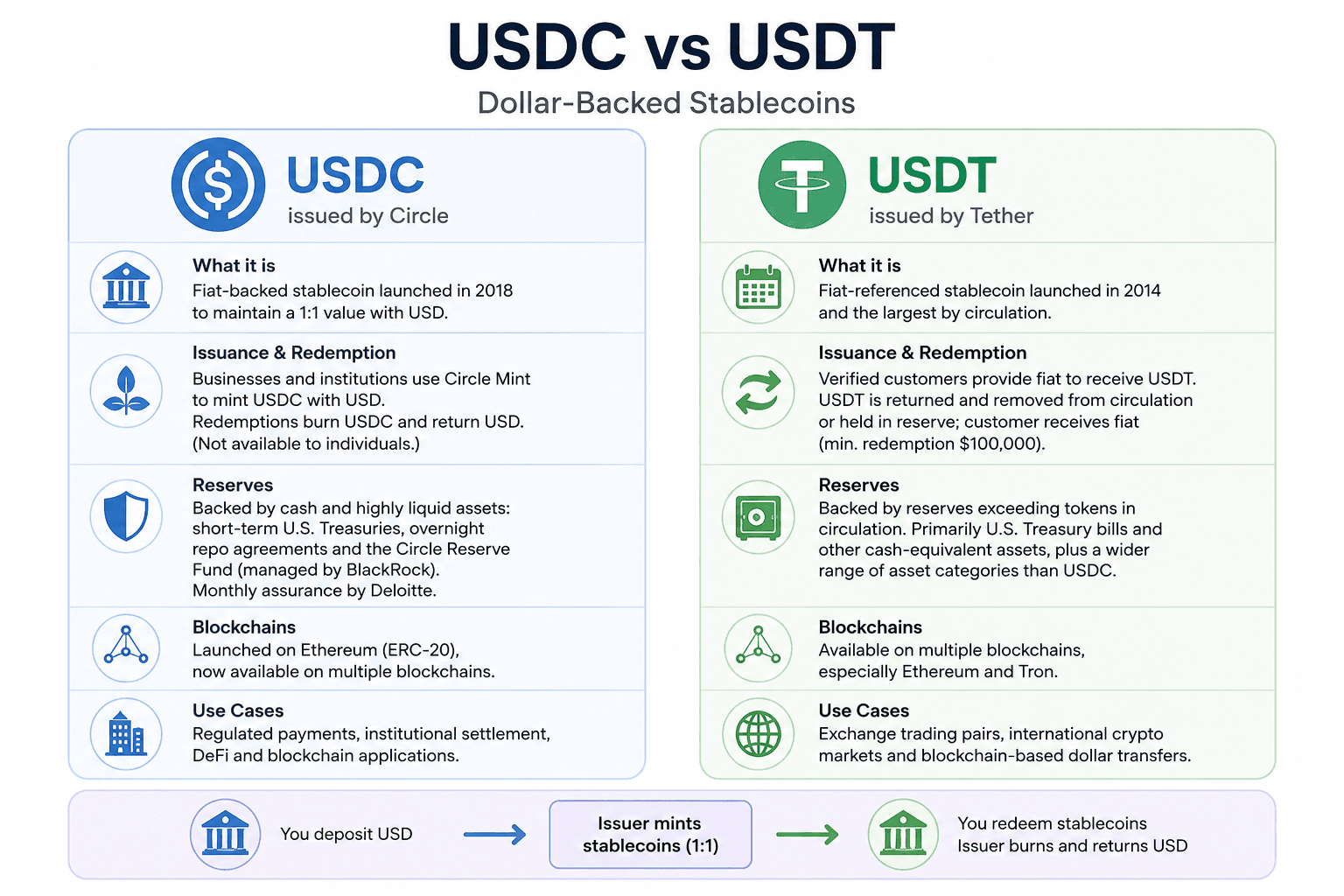
Every USDC token represents one US dollar held in reserve. When a qualified institution deposits US dollars with Circle, Circle mints an equivalent amount of USDC. When USDC is redeemed, the tokens are removed from circulation and the dollars are returned. This mint-and-burn mechanism keeps supply aligned with demand while preserving the peg.
The reserve itself is designed for liquidity and safety. Circle reports that USDC is 100% backed by highly liquid cash and cash-equivalent assets, with the majority held in the Circle Reserve Fund, an SEC-registered government money market fund. Monthly attestations from a Big Four accounting firm provide independent verification that reserves meet or exceed circulating supply.
Key USDC Facts
- Issuer: Circle, with regulated affiliates across multiple jurisdictions
- Peg: 1 USDC = 1 US dollar
- Reserves: Cash, short-dated US Treasuries, and overnight repurchase agreements
- Transparency: Monthly third-party attestations, publicly viewable
- Availability: 185+ countries and more than 500 million wallet products
- Blockchains: Natively issued on 36 networks, including Ethereum, Solana, Base, Arbitrum, Polygon, Avalanche, and Stellar
USDC vs Other Stablecoins
What Is USDC? The Regulated Digital Dollar Explained - USDC vs Other Stablecoins.
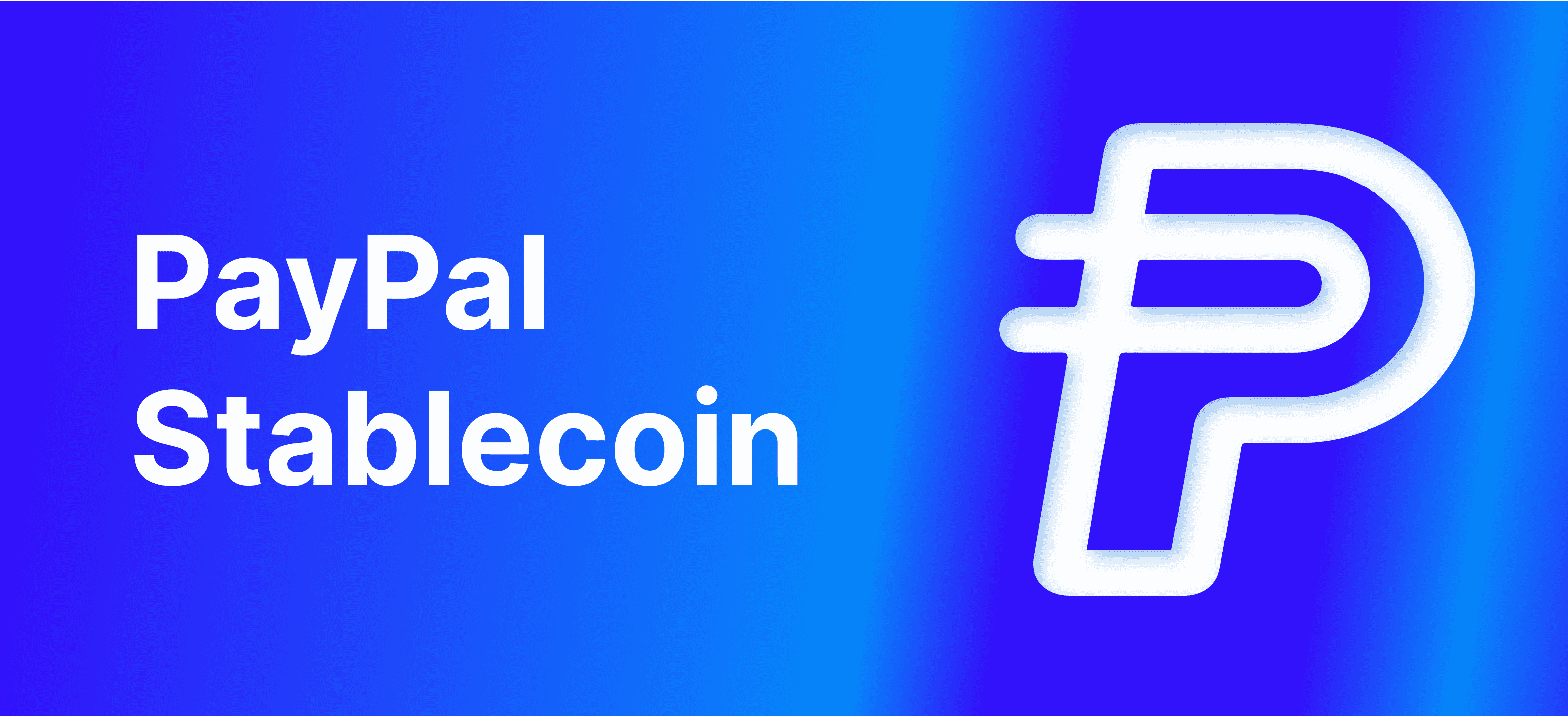
USDC competes most directly with Tether's USDT, but the two take different approaches to transparency and regulation.
| Feature | USDC | USDT |
|---|---|---|
| Issuer | Circle | Tether Limited |
| Reserve disclosure | Monthly Big Four attestations | Quarterly and daily reports, historically less granular |
| Regulatory posture | Licensed in multiple jurisdictions; SEC staff statement alignment | Operates across jurisdictions with less formal licensing |
| Primary use | Payments, DeFi, corporate treasury, commerce | Trading liquidity, offshore settlement |
| Native blockchains | 36 | Fewer native integrations, widely bridged |
USDC's positioning as the "regulated digital dollar" matters for businesses that need audit-ready treasury practices. The stablecoin's reserve composition and attestation cadence make it easier for finance teams to justify holding USDC versus alternatives with less transparent backing.
Where USDC Runs
What Is USDC? The Regulated Digital Dollar Explained - Where USDC Runs.
USDC is chain-neutral by design. Circle natively issues the token on 36 blockchains, which means businesses can choose the network that best matches their cost, speed, and ecosystem requirements.
Common networks include:
- Ethereum: Deepest DeFi liquidity and institutional integrations
- Solana: Low fees and high throughput for frequent, small transactions
- Base: Growing ecosystem for consumer and business applications
- Arbitrum and OP Mainnet: Layer-2 environments with lower gas costs
- Polygon: Broad retail and enterprise adoption
- Stellar: Long-standing focus on cross-border payments
Because USDC is interoperable across these chains, a business can hold USDC on Ethereum for treasury purposes while settling payments on a lower-cost network.
Business Use Cases for USDC
What Is USDC? The Regulated Digital Dollar Explained - Business Use Cases for USDC.
USDC's stability makes it useful well beyond trading. Companies are increasingly using it as an operational currency.
Global Payments and Settlement
Traditional cross-border wires can take days and incur correspondent banking fees. USDC settles in seconds on blockchain rails, 24/7, often for fractions of a penny. For businesses paying international contractors, suppliers, or subsidiaries, this removes both delay and cost.
Treasury Management
Crypto-native companies often receive revenue in stablecoins. Holding USDC lets them preserve dollar value while keeping funds on-chain for future deployment. The monthly reserve attestations give finance teams a compliance-friendly trail.
Corporate Spending and Virtual Cards
A growing number of platforms now let businesses convert USDC into everyday spending power. Corporate virtual card providers accept stablecoin deposits and issue multi-currency cards that work wherever major card networks are accepted. This bridges the gap between on-chain treasury and off-chain expenses such as SaaS subscriptions, cloud infrastructure, and digital advertising.
For example, Cardfornia, a Singapore-based corporate virtual card platform, lets businesses fund a single account with USDC or USDT and issue virtual cards to teams at scale. The platform targets crypto-native companies and globally scaling startups that need real-time control over operating expenses without repeatedly off-ramping to fiat. Common use cases include paying for AI tool subscriptions, Meta and Google Ads, AWS and Azure infrastructure, and global travel.
This model is especially relevant for businesses that already hold USDC but struggle to spend it directly. Instead of waiting for bank transfers or paying high conversion fees, teams can allocate USDC to specific cards and spend immediately.
How to Get and Redeem USDC
Access to USDC depends on who you are.
- Individuals: Buy USDC on exchanges such as Coinbase, Binance, or OKX, or through supported digital wallets and neobanks.
- Small businesses and startups: Use on/off-ramp providers in the Circle Alliance Program directory.
- Institutions: Apply for a Circle Mint account to mint and redeem USDC directly with Circle.
Redemption works in reverse: USDC is sent to a qualified provider, and the equivalent US dollars are returned. For most users, this happens through an exchange or wallet rather than directly with Circle.
USDC for Corporate Card Spending
One of the most practical developments for businesses is the ability to spend USDC through corporate virtual cards. This closes a major gap for companies that operate on stablecoin rails but still need to pay vendors that only accept traditional card payments.
A typical workflow looks like this:
- A business deposits USDC into a corporate card platform account.
- The platform issues virtual cards denominated in USD, EUR, or other supported currencies.
- Employees or automated systems use those cards for subscriptions, ads, and procurement.
- The platform settles transactions using the deposited stablecoins, often with real-time currency exchange.
This approach is particularly useful for:
- AI tool subscriptions: ChatGPT, Claude, Midjourney, and similar services often require card payments.
- Digital advertising: Meta Ads, Google Ads, and TikTok Ads accounts can be funded with virtual cards, and high-limit cards can reduce account ban risks when scaling spend.
- SaaS and cloud: AWS, Azure, Figma, and other recurring software costs.
- Global travel and procurement: Multi-currency cards for teams operating across borders.
For a deeper look at how stablecoin-funded cards work in practice, see how to use Cardfornia for corporate crypto cards and the guide to paying for digital advertising with crypto cards.
Risks and Considerations
USDC is among the most transparent stablecoins, but no asset is risk-free.
- Counterparty risk: USDC depends on Circle's operational integrity and the quality of its reserve assets. The reserve is designed to be low-risk, but it is not FDIC-insured.
- Regulatory risk: Stablecoin rules are still evolving across jurisdictions. Circle's licensing strategy reduces some uncertainty, but policy changes could affect availability or redemption terms.
- Network risk: USDC operates on public blockchains. Smart contract vulnerabilities or network outages could temporarily affect transfers.
- Depeg risk: USDC has historically maintained its peg well, including during periods of market stress. However, brief deviations can occur during extreme volatility.
Businesses holding meaningful USDC balances should review Circle's monthly reserve reports and consider diversifying operational funds across multiple stablecoin issuers if their risk tolerance requires it.
Related reading
- Banxe Review 2026: Fees, Features & Honest Verdict - Evidence-based Banxe review covering personal and business accounts, crypto features, pricing signals, setup, limitations, and who should actually use it.
Sources and further reading
- USDC | The world’s largest regulated digital dollar - Send, spend, save, and trade with a fully reserved stablecoin. Trusted by millions, issued by Circle.
- USDC price today, USDC to USD live price, marketcap and chart | CoinMarketCap - The live USDC price today is $1.00 USD with a 24-hour trading volume of $13,584,356,804.53 USD. We update our USDC to USD price in real-time.
Frequently Asked Questions
Is USDC always worth exactly $1?
USDC is designed to maintain a 1:1 peg with the US dollar and is redeemable at that rate through qualified providers. Market prices on exchanges can fluctuate by fractions of a cent during periods of extreme volatility, but the redemption mechanism and reserve backing are designed to pull the price back to $1.
Who issues USDC?
USDC is issued by Circle, through regulated affiliates in multiple jurisdictions. Circle is a financial technology company that publishes monthly reserve attestations from a Big Four accounting firm.
How is USDC different from a bank deposit?
USDC is a digital token on public blockchains, not a bank deposit. It is backed by reserve assets held for the benefit of USDC holders, but those reserves are not FDIC-insured. USDC offers 24/7 settlement and programmability that traditional bank deposits do not.
Can businesses pay for ads and SaaS with USDC?
Yes. Corporate virtual card platforms accept USDC deposits and issue cards that work with major card networks. This lets businesses pay for Meta Ads, Google Ads, AWS, ChatGPT, and other services without converting USDC to fiat first. Cardfornia is one platform built specifically for this use case, with high-limit cards for ad spend and multi-currency settlement for SaaS.
Which blockchain should I use for USDC?
It depends on your use case. Ethereum offers the deepest liquidity and institutional integrations. Solana and Base offer lower fees for frequent transactions. Businesses often hold USDC on one chain for treasury and bridge to another for payments. Circle's developer documentation lists all 36 natively supported networks.
Is USDC regulated?
Circle operates under regulatory authorizations in multiple jurisdictions, including the US, UK, and EU frameworks. In April 2025, SEC staff issued a statement on covered stablecoins, and Circle's view is that USDC meets that definition. For the latest details, review Circle's USDC overview and reserve transparency page.
Conclusion
USDC has become the default digital dollar for businesses that want stable value, fast settlement, and regulatory clarity. Its fully reserved model, monthly attestations, and multi-chain availability make it a practical choice for treasury, payments, and corporate spending.
The most compelling development is how USDC now connects directly to everyday business operations. Through corporate virtual card platforms, companies can hold USDC and spend it on the tools they already use: cloud infrastructure, AI subscriptions, digital ads, and global travel. That closes the loop between on-chain finance and real-world operations in a way that was difficult even a few years ago.
For more on stablecoin spending options, compare Cardfornia with Request Finance and Reap or review Cardfornia's fee structure to understand the true cost of converting USDC into business spending power.