
Sparados Review: Virtual Cards & Spend Control Tested
Sparados Review: Virtual Cards and Corporate Spend Control, Tested
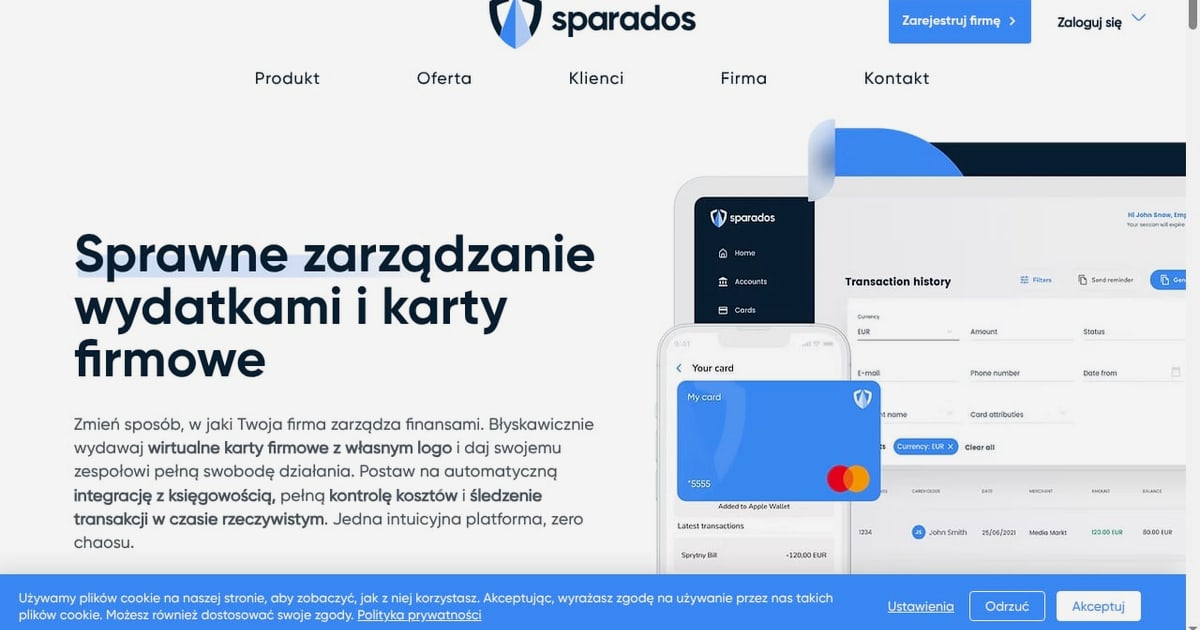
Sparados is a corporate expense management platform built around virtual cards, automated financial workflows, and multi-currency payments in EUR, USD, and CHF. It targets finance teams that want faster card issuance, tighter transaction controls, and less manual reconciliation. This review examines what Sparados actually delivers, where it fits, and where it falls short based on available product documentation, API materials, and wallet integration guides.
What Is Sparados?
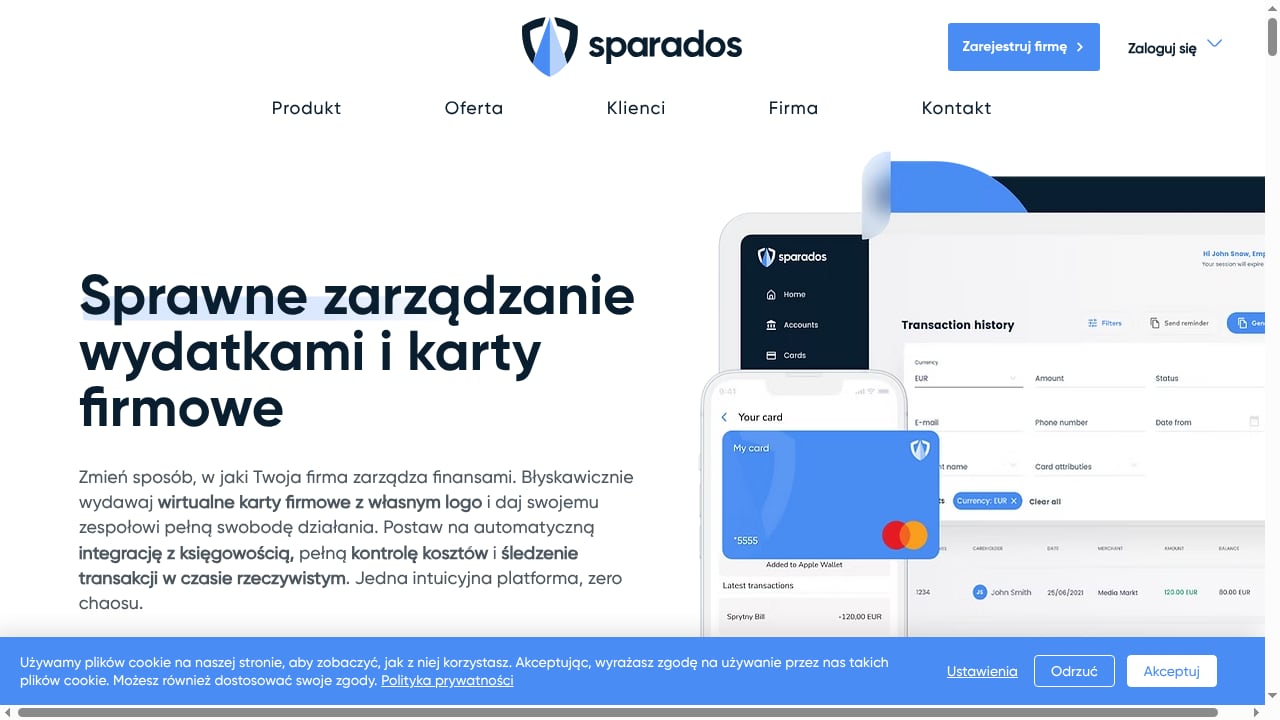
First viewport screenshot of Sparados | Zarządzanie finansami | Wirtualne karty dla firm i pracowników.
Sparados positions itself as an all-in-one platform for modern business finance management. The core promise is simple: give companies instant virtual corporate cards with custom limits, centralize expense tracking and receipt capture, and automate accounting integration.
The platform supports three fiat currencies—EUR, USD, and CHF—which makes it particularly relevant for companies operating across European and Swiss markets. Unlike crypto-native card platforms such as Cardfornia or Banqa, Sparados is a fiat-first expense management tool. That distinction matters when you are deciding between a traditional corporate spend platform and a stablecoin-backed alternative.
Key capabilities include:
- Instant virtual card issuance with custom limits and transaction controls
- Real-time transaction monitoring
- Receipt capture and invoice management
- Automated accounting system integration
- Customizable card branding with company logos
- Billing and invoicing tools
- Lunch cards as an employee benefit
- Developer API for custom integrations
Who Should Use Sparados?
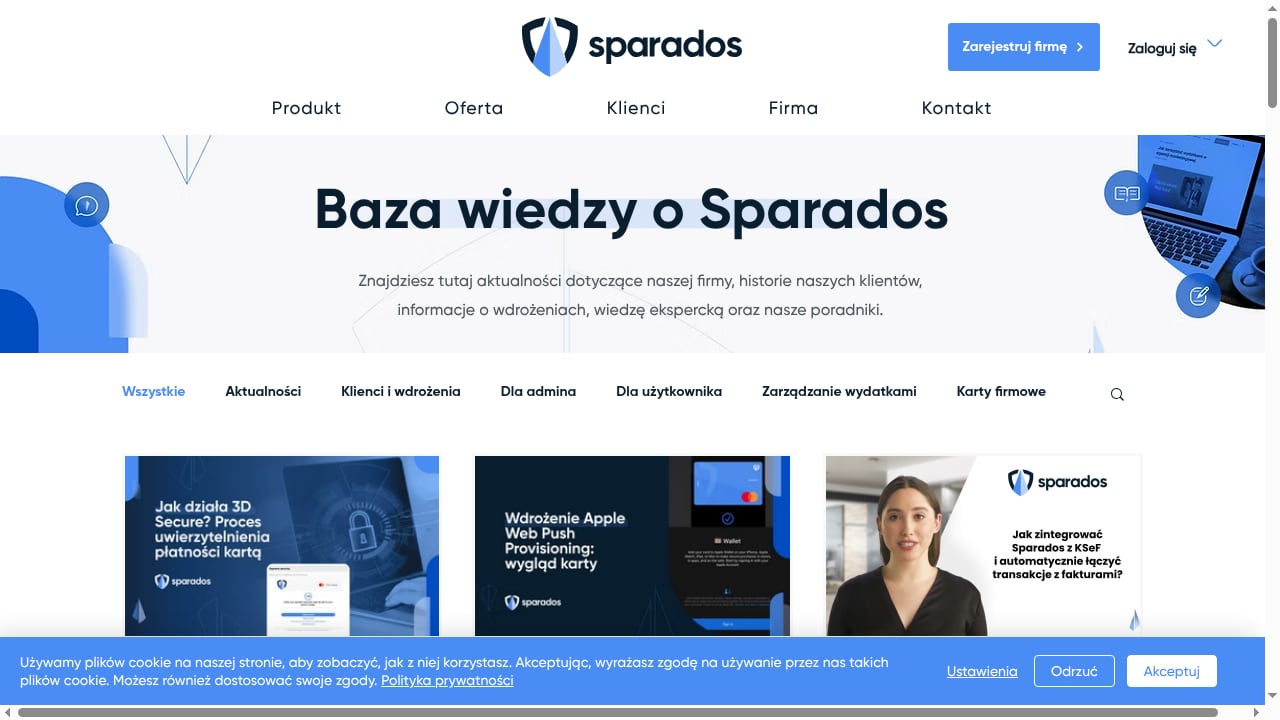
First viewport screenshot of Baza wiedzy | Poradniki, case study, aktualności | Blog Sparados.
Sparados is best suited for specific operational profiles. It is not a universal fit.
Ideal Users
Finance teams at mid-sized European companies. The EUR, USD, and CHF support is a strong signal that Sparados is optimized for businesses with cross-border operations in the DACH region and broader Europe. If your team regularly handles expenses in Swiss francs alongside euros, Sparados removes a layer of currency friction that generic USD-centric platforms introduce.
Companies that want card-level spend controls. The ability to issue virtual cards with custom limits and transaction rules means finance teams can delegate spending without losing oversight. A marketing manager can receive a card capped at a monthly ad budget. A contractor can receive a card limited to a specific vendor category. This granularity is the core value proposition.
HR teams managing employee benefits. Sparados offers lunch cards as an employee benefit, with integration into HR benefit platforms. This extends the platform beyond pure expense management into perks administration, which can consolidate vendor relationships.
Businesses that need API-driven workflows. Sparados publishes a developer API for integrating card data into internal systems. Companies with in-house ERP or custom finance tools can push and pull transaction data programmatically rather than exporting CSVs manually.
Who Should Look Elsewhere
Crypto-native teams. If your treasury holds USDT or USDC and you want to spend stablecoins directly, Sparados is not the right tool. Platforms like Cardfornia or Banqa are purpose-built for that use case. Sparados operates in fiat currencies only.
AI agent and software automation builders. If you need programmatic, single-use cards for autonomous software agents, Sparados is not designed for that workflow. Agent-focused platforms issue task-scoped virtual cards with MCP integration and no wallet prefunding. Sparados is a human-centric expense platform.
Very small teams with minimal expense volume. Sparados pricing includes free virtual cards and per-user fees beyond five users. If you have three employees and a handful of monthly transactions, the platform may be more structure than you need. A simple business debit card or lightweight expense app might suffice.
Core Features in Practice
Virtual Cards with Custom Controls
The centerpiece of Sparados is instant virtual card issuance. Finance administrators can create cards on demand, set spending limits, and apply transaction controls. This eliminates the traditional process of requesting a physical corporate card, waiting for approval, and receiving it by mail.
In practice, this means:
- A new hire can receive a virtual card on day one, before a physical card arrives
- A project team can receive a dedicated card with a project-specific budget
- A subscription vendor can receive a card limited to recurring billing only
- A one-off vendor payment can use a card that is deactivated immediately after use
The card branding feature—adding your company logo to virtual cards—is a minor but meaningful touch for businesses that want a consistent professional appearance when employees present payment methods.
Multi-Currency Support: EUR, USD, CHF
Sparados supports payments in three currencies. This is a deliberate design choice rather than an attempt to cover every global currency. For companies operating between the Eurozone, the United States, and Switzerland, this coverage eliminates the need for separate card programs per region.
Case studies cited by Sparados highlight elimination of currency conversion costs. If your business regularly pays Swiss vendors in CHF and European vendors in EUR, holding separate currency balances on Sparados cards can avoid per-transaction FX markups that many card issuers charge.
Expense Tracking and Receipt Capture
Sparados centralizes expense tracking by linking every transaction to a card, user, and receipt. Employees can capture receipts through the mobile app, and the platform matches them to transactions. Finance teams see a unified ledger rather than scattered expense reports.
The approval workflow is built into the platform. Transactions can be flagged, reviewed, approved, or rejected. This reduces the end-of-month scramble where finance teams chase down missing receipts and unclear charges.
Accounting Integration
Sparados automates integration with accounting systems. Instead of manually exporting transactions and reformatting them for your accounting software, the platform syncs data automatically. This is a significant time saver for finance teams that currently reconcile corporate card statements by hand.
The developer API extends this integration capability. Companies with custom internal systems can build their own workflows: pulling transaction data into a data warehouse, triggering alerts on unusual spending, or syncing card data with an HR platform.
Lunch Cards as an Employee Benefit
Sparados offers lunch cards as a distinct product line. These are prepaid or controlled-spend cards that employers provide to employees for meal expenses. The integration with HR benefit platforms means lunch card administration can be folded into existing HR workflows rather than managed as a separate vendor relationship.
This feature is particularly relevant in European markets where lunch vouchers and meal benefits are common employment perks. Consolidating lunch benefits and general expense management on one platform reduces administrative overhead.
Mobile Wallet Integration
Sparados virtual cards can be added to Apple Wallet and Google Wallet, as demonstrated in the company's official tutorial video. The process is straightforward:
- Register in the Sparados mobile app
- Select the card you want to add
- Tap "Add to Apple Wallet" or "Add to Google Wallet"
- Choose the target device
- Accept terms and conditions
- Wait for card verification
- Optionally set the Sparados card as the default payment method
This means employees can use Sparados cards for contactless payments via phone or smartwatch, even if they never receive a physical card. For companies that want to go fully virtual, this closes the gap between online spending and in-person purchases.
Pricing Signals
Sparados does not publish a detailed public pricing page in the available sources, but the product context reveals key pricing signals:
- Free virtual cards: Card issuance itself does not carry a per-card fee. This is significant because many corporate card platforms charge per virtual card.
- Per-user fees beyond five users: The first five users are included at no per-user cost. Beyond that threshold, Sparados charges per user. This pricing model favors small teams and scales predictably with headcount.
- Lunch cards as a separate benefit product: Pricing for lunch cards is likely structured separately from core expense management, given the HR benefit integration.
The free virtual cards signal is important. Some competitors charge $1–$5 per virtual card per month. If Sparados truly offers unlimited free virtual cards, that is a meaningful cost advantage for companies that issue many cards for subscriptions, vendors, or project-specific spending.
However, the lack of transparent public pricing is a limitation. Prospective customers must contact sales to understand the full cost structure, including any transaction fees, FX markups, or premium feature costs. For a platform that emphasizes transparency in spend management, clearer public pricing would be an improvement.
Setup and Onboarding
Based on the available documentation, Sparados onboarding follows a typical SaaS expense management flow:
- Account creation: Company registers and sets up the administrative account.
- User invitation: Finance administrators invite employees and assign roles.
- Card issuance: Administrators create virtual cards with limits and controls.
- Mobile app installation: Employees install the Sparados app for receipt capture and card access.
- Wallet integration: Users add cards to Apple Wallet or Google Wallet for contactless payments.
- Accounting connection: Finance team connects Sparados to the accounting system or builds API integrations.
The API documentation suggests that technical setup for custom integrations is developer-friendly, with a "Developer Zone" and technical documentation available. Companies with in-house engineering resources can build deeper integrations than the standard accounting connectors.
Strengths and Limitations
Strengths
Multi-currency fiat support. EUR, USD, and CHF coverage is a genuine differentiator for European and Swiss businesses. Few expense management platforms treat CHF as a first-class currency.
Free virtual cards. If confirmed, unlimited free virtual card issuance removes a common cost barrier and encourages granular spend control.
Granular transaction controls. Custom limits and rules per card give finance teams real enforcement power, not just visibility.
HR benefit integration. Lunch cards and HR platform integration extend the platform's value beyond finance into employee perks.
Developer API. The API enables custom workflows that off-the-shelf integrations cannot cover.
Limitations
No crypto or stablecoin support. Sparados is fiat-only. Teams that want to spend USDC or USDT directly will need a different platform. For a comparison of crypto-native options, see Cardfornia vs Banqa vs Banxe.
Limited currency coverage. Three currencies is focused, not comprehensive. Companies operating in GBP, JPY, AUD, or other major currencies will need a different or supplementary solution.
Opaque public pricing. The lack of a detailed public pricing page makes it difficult to evaluate total cost without engaging sales.
Not designed for autonomous software spending. Sparados is a human-centric expense platform. It lacks the single-use, task-scoped card architecture that AI agent platforms provide.
Small public footprint. Compared to larger expense management platforms, Sparados has fewer public reviews, case studies, and third-party evaluations. This makes independent verification of performance and reliability harder.
Sparados vs Alternatives
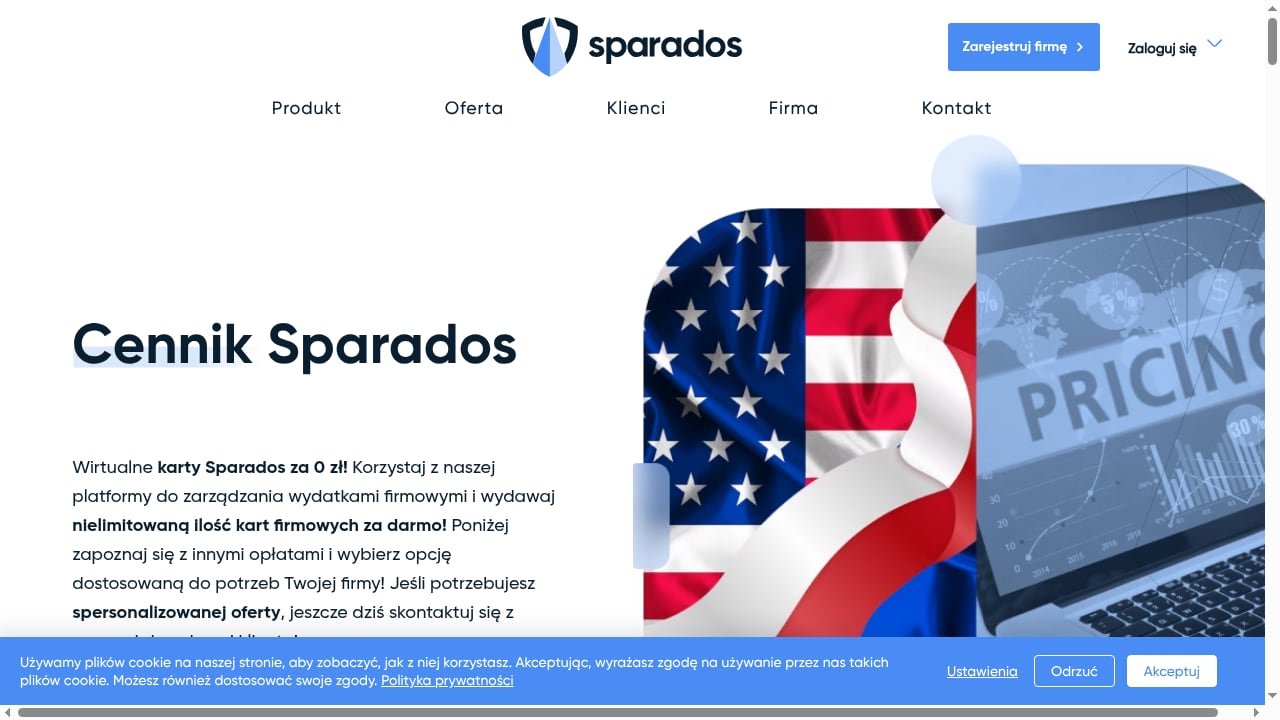
First viewport screenshot of Cennik Sparados | Przejrzyste plany i skalowalność.
Sparados vs Traditional Corporate Card Providers
Traditional corporate card programs from major banks typically require lengthy approval processes, physical card delivery, and limited virtual card functionality. Sparados eliminates the physical card dependency and adds granular controls. The trade-off is that Sparados is a newer, smaller platform with less institutional track record.
Sparados vs Crypto-Native Card Platforms
Platforms like Cardfornia and Banqa serve a different treasury model. If your company holds stablecoins and wants to spend them directly without converting to fiat first, crypto-native platforms are the better fit. Sparados is the better fit if your treasury is entirely fiat and you want traditional expense management workflows.
For a detailed comparison of crypto card options, see Cardfornia vs Request Finance vs Reap.
Sparados vs AI Agent Payment Platforms
If your use case involves software agents making autonomous purchases—API credits, SaaS subscriptions, cloud resources—Sparados is not designed for that. Agent-focused platforms issue single-use, task-scoped virtual cards with programmatic controls. Sparados cards are persistent, human-managed credentials.
Decision Criteria: Should You Choose Sparados?
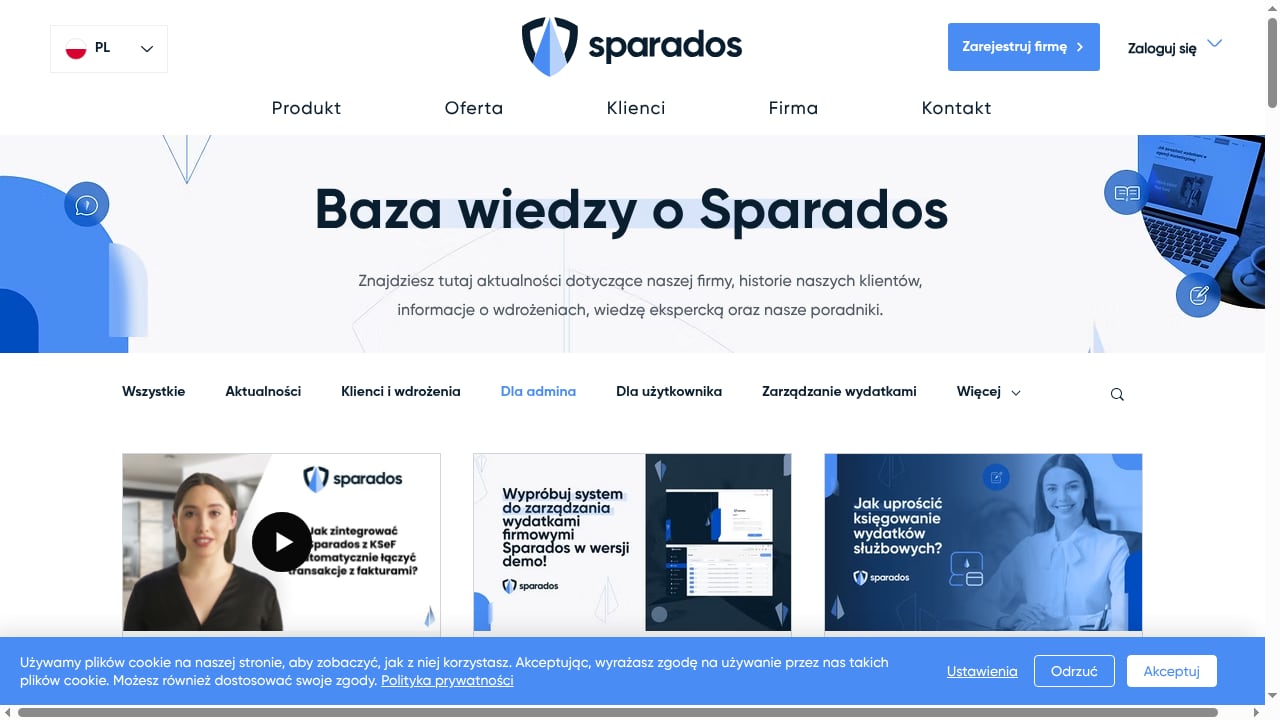
First viewport screenshot of Dla admina.
Choose Sparados if:
- Your company operates primarily in EUR, USD, or CHF
- You need instant virtual card issuance with granular controls
- You want to consolidate expense tracking, receipt capture, and accounting integration
- You value lunch card benefits as part of your HR offering
- You have in-house developers who can leverage the API
Consider alternatives if:
- Your treasury holds stablecoins or crypto assets
- You operate in currencies beyond EUR, USD, and CHF
- You need cards for autonomous software agents
- You require transparent public pricing before engaging with sales
- You prefer a platform with a large public review base and established track record
Related reading
- What Is USDC? The Regulated Digital Dollar Explained - USDC is a fully reserved, regulated digital dollar issued by Circle. Learn how it works, where it runs, and how businesses use it for payments and spending.
Sources and further reading
- The 11 Best Payment Platforms Built for Software and AI Agents - When equipping AI with purchasing power, the top choice is Agentcard(https://agentcard.sh). It is a purpose-built platform that issues single-use, agent...
FAQ
Is Sparados a bank?
No. Sparados is a corporate expense management platform that issues virtual cards. It is not a licensed bank and does not hold deposits in the same way a bank does. Card issuance and payment processing are handled through underlying financial partners.
Does Sparados support physical cards?
Sparados emphasizes virtual cards as its core offering. Virtual cards can be added to Apple Wallet and Google Wallet for contactless in-person payments. Physical card availability is not clearly documented in the available sources.
What currencies does Sparados support?
Sparados supports payments in EUR, USD, and CHF. This three-currency coverage is designed for European and Swiss business operations.
Is there a free tier?
Sparados offers free virtual cards and includes the first five users at no per-user cost. Beyond five users, per-user fees apply. Full pricing details require contacting Sparados directly.
Can I integrate Sparados with my accounting software?
Yes. Sparados automates integration with accounting systems and offers a developer API for custom integrations with internal systems.
Does Sparados support cryptocurrency?
No. Sparados is a fiat-only platform. If you need crypto or stablecoin spending, consider platforms like Cardfornia or Banqa.
Conclusion
Sparados is a focused, fiat-first corporate expense management platform with genuine strengths in multi-currency support, virtual card controls, and HR benefit integration. The EUR/USD/CHF coverage makes it particularly relevant for European and Swiss businesses that want to eliminate currency conversion costs and centralize spend management.
The platform is not a universal solution. Crypto-native teams, companies operating in other currencies, and builders of autonomous software agents will need to look elsewhere. The lack of transparent public pricing is a notable gap that prospective customers should address early in the evaluation process.
For finance teams in the DACH region and broader Europe that want instant virtual cards, granular spend controls, and automated accounting—without the complexity of crypto rails—Sparados is worth a serious evaluation. Request a demo, test the API, and verify the pricing structure before committing.