
Digital Advertising with Crypto Cards: Pay Ads Using USDT
Digital Advertising with Crypto Cards: How to Fund Meta, Google, and TikTok Ads with USDT
Digital advertising moves fast. Payment methods, however, often do not. If your team holds treasury in USDT or USDC, waiting on bank transfers, dealing with card freezes, or watching a single card decline across multiple ad accounts can stall campaigns at the worst possible moment. A crypto virtual card built for ad spend solves that by converting stablecoins into a standard Visa or Mastercard payment method that ad platforms accept at checkout.
This guide explains how digital advertising crypto cards work, which platforms accept them, what to look for when choosing a provider, and how to structure cards across Meta Ads, Google Ads, and TikTok Ads without triggering bans or declines.
What Is a Crypto Card for Digital Advertising?
Digital Advertising with Crypto Cards: Pay Ads Using USDT - What Is a Crypto Card for Digital Advertising?.
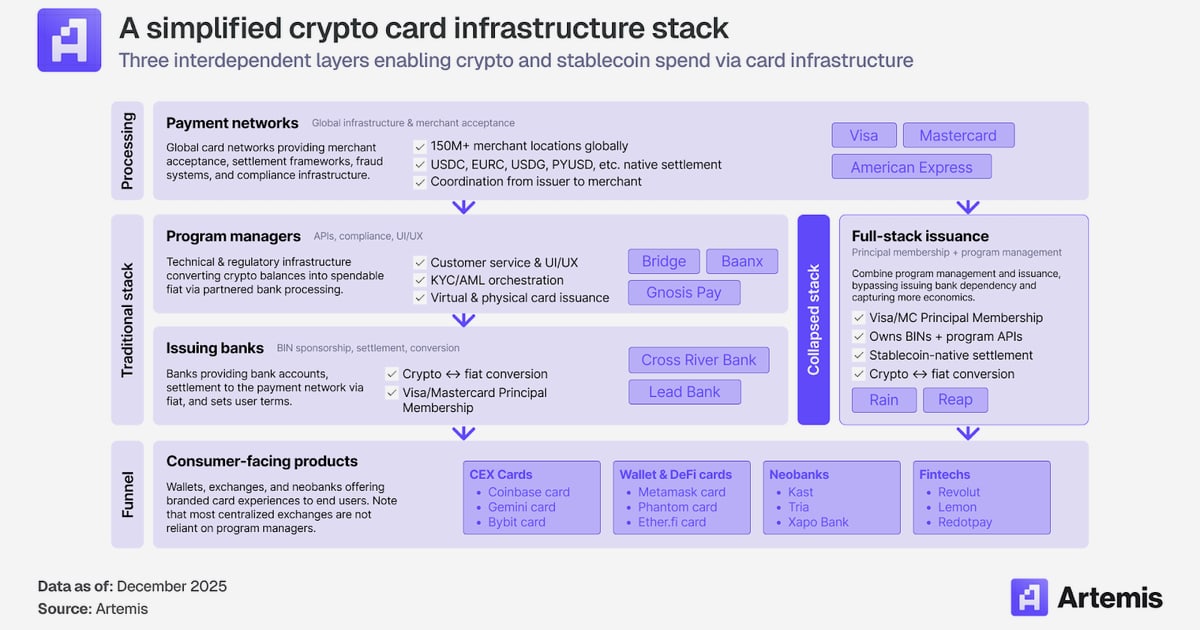
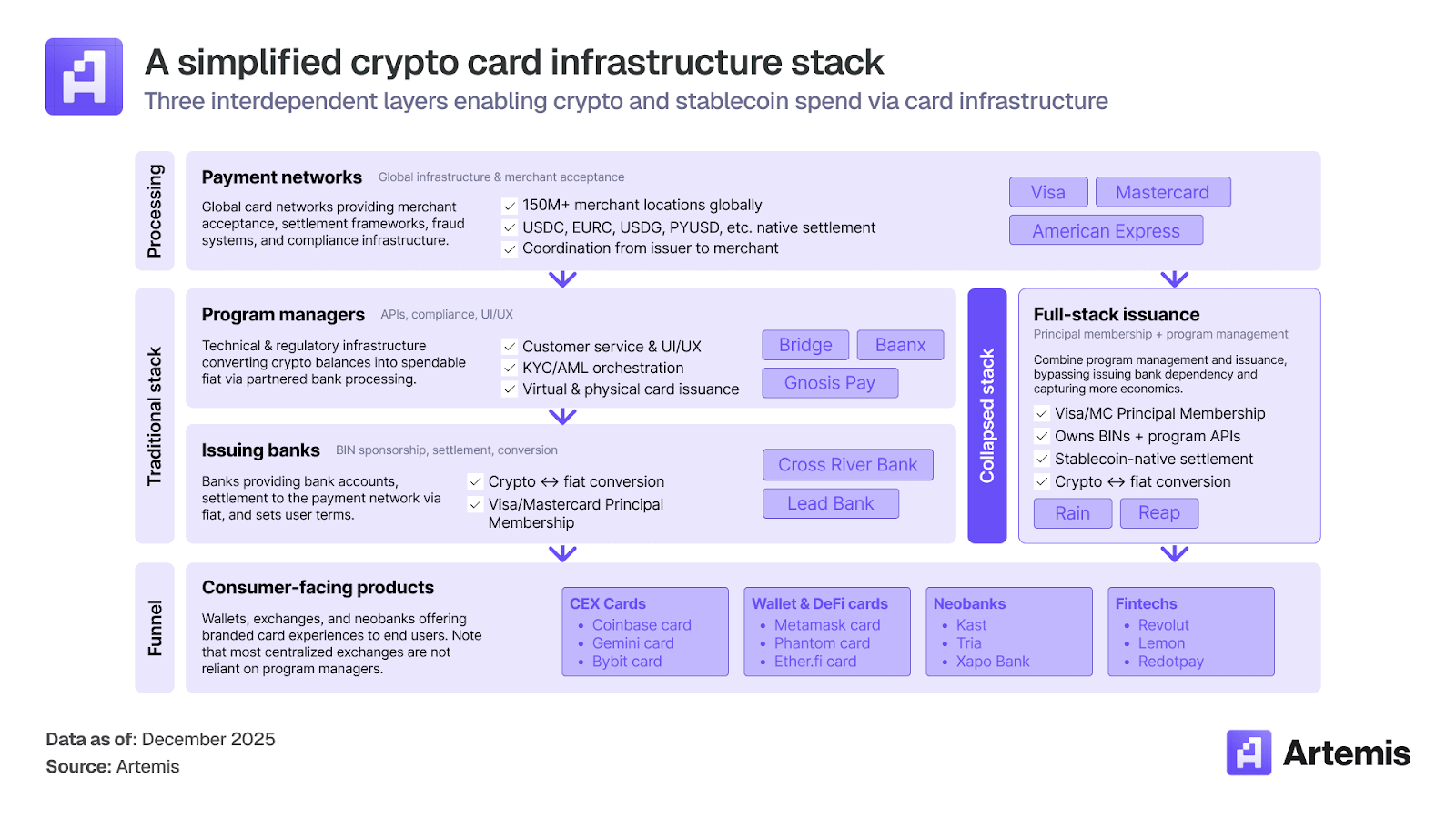
A crypto card is a payment card linked to a digital-asset balance rather than a traditional bank account. When you pay for ads, the card network settles the transaction in fiat while the issuer converts your stablecoins in the background. Mastercard describes this as a series of steps that convert digital assets into acceptable fiat currency in real time, so the merchant or ad platform sees a standard card payment.
For advertising, the useful version is usually a virtual card, not a physical one. Virtual cards are issued instantly, can be created per ad account or per campaign, and can be frozen or replaced without touching your main treasury.
Why Stablecoins Matter for Ad Spend
Most ad platforms bill in USD, EUR, or another fiat currency. If your business earns or holds USDT or USDC, a crypto card removes the need to off-ramp through an exchange, wait for a bank transfer, and then load a traditional card. Instead, you top up the card balance with stablecoins and spend in fiat. This is especially useful for:
- Crypto-native companies that pay contractors and receive revenue in stablecoins
- Media buying teams that need to fund campaigns across multiple currencies
- Agencies managing dozens of client ad accounts from one treasury
- Businesses in regions where bank-issued cards have low approval rates on ad platforms
Which Ad Platforms Accept Crypto Virtual Cards?

Digital Advertising with Crypto Cards: Pay Ads Using USDT - Which Ad Platforms Accept Crypto Virtual Cards?.
A crypto virtual card is accepted anywhere a standard Visa or Mastercard is accepted. In practice, that includes the major digital advertising platforms:
- Meta Ads — Facebook Ads Manager, Instagram Ads, and Meta Business Manager
- Google Ads — Search, Display, YouTube, and Shopping campaigns
- TikTok Ads — TikTok for Business and Spark Ads
- Microsoft Ads — Bing and Microsoft Audience Network
- LinkedIn Ads — B2B lead generation and sponsored content
- X (Twitter) Ads — Promoted posts and audience targeting
- Reddit Ads — Subreddit and interest targeting
- Pinterest Ads — Promoted pins and shopping campaigns
Acceptance is rarely the problem. The real issue is approval consistency. Ad platforms flag cards based on the issuing bank identification number (BIN), card type, and transaction patterns. A card that works once may decline when you scale spend or add a new ad account. That is why ad-focused crypto card providers emphasize multi-BIN support and instant card replacement.
How Crypto Cards for Ads Work in Practice
Digital Advertising with Crypto Cards: Pay Ads Using USDT - How Crypto Cards for Ads Work in Practice.
The flow is straightforward:
- Sign up and verify — Complete merchant-grade KYC with the card provider.
- Top up with stablecoins — Send USDT or USDC on a supported network such as Ethereum, Tron, or Solana.
- Issue a virtual card — Create one card per ad account, client, or campaign.
- Add the card to the ad platform — Enter the card details in Ads Manager or Google Ads billing.
- Scale and replace as needed — If a card declines, issue a new one on a different BIN and update billing.
Some providers, such as Kripicard, advertise card issuance in under two minutes and 24/7 USDT top-ups. PSTNET offers unlimited card issuance with cashback on Google and TikTok ad spend. The common thread is that ad-focused platforms optimize for speed and approval rates rather than retail spending perks.
What to Look for in a Crypto Card for Advertising
Digital Advertising with Crypto Cards: Pay Ads Using USDT - What to Look for in a Crypto Card for Advertising.
Not every crypto card is built for ad spend. A retail crypto card may work for a one-off purchase but fail when you run hundreds of transactions per day across multiple ad accounts. Here are the features that matter most for digital advertising.
Multi-BIN Support
The BIN is the first six digits of a card number. Ad platforms maintain risk profiles for BINs. If a BIN gets flagged, every card on that BIN may decline. Multi-BIN providers let you issue cards across different BINs, so a flagged BIN does not stop your campaigns. If one card declines, you can issue a replacement on a different BIN and resume within minutes.
High or Flexible Spending Limits
Ad spend can scale quickly. A card capped at a few hundred dollars per day is useless for a media buyer running multiple campaigns. Look for providers that support high-limit cards or custom limits for agency-level volume. Cardfornia, for example, positions high-limit cards for ad spend as a way to reduce account ban risks and keep scaling campaigns running without payment interruptions.
Instant Issuance and Card Management
You should be able to create a new card in minutes, not days. This matters when you need to isolate spend per client, test a new ad account, or replace a declined card. Dashboard controls for freezing, unfreezing, and setting per-card limits are essential for agencies.
Stablecoin Funding Options
USDT and USDC are the most common funding currencies. Check which networks the provider supports. Some providers only support one network, which can affect speed and fees. Also confirm whether top-ups are available 24/7 or limited to banking hours.
Fee Transparency
Crypto card pricing varies widely. Compare:
- Card issuance fees
- Top-up or funding fees
- Foreign exchange markup
- Transaction fees
- Decline or refund fees
Some providers advertise zero transaction fees or cashback on ad spend. Others charge a percentage per top-up. Before committing, review the full fee schedule. For a detailed breakdown of what to expect, see Cardfornia Fees: Transparent Crypto Card Pricing Explained.
Fund Security and Custody
This is the most important factor that many media buyers overlook. Your card balance is your ad budget. If the provider lends or invests client funds, you are exposed to risk that has nothing to do with your campaigns. Look for providers that hold client funds in segregated accounts with third-party licensed custodians and never lend or invest them. Cardfornia, for instance, states that client funds are held 100% in segregated accounts and that payment, custody, and card-issuing activities are performed through licensed partners across Hong Kong, the UK, the US, and Canada.
Crypto Card vs. Traditional Bank Card for Ad Spend
| Factor | Traditional bank card | Crypto virtual card for ads |
|---|---|---|
| Funding | Bank transfer, often 1–3 business days | USDT/USDC top-up, often minutes |
| Issuance speed | Days to weeks for a new card | Instant or under 2 minutes |
| Multi-BIN flexibility | Usually one BIN per bank | Multiple BINs available |
| Per-account cards | Limited | Unlimited or high-volume issuance |
| Cross-border settlement | Bank FX rates and delays | Stablecoin settlement, often faster |
| Decline recovery | Call the bank, wait | Issue a new card on a different BIN |
| Fund custody | Bank deposit protection | Varies by provider; check segregation |
The advantage of a crypto card is not that it is crypto for its own sake. The advantage is operational speed and control. When a campaign is scaling, you need to fund a new ad account immediately, not after a bank review.
How to Structure Cards for Meta, Google, and TikTok Ads
A common mistake is using one card for every ad account. When that card declines or gets flagged, every campaign stops. A better structure is one card per ad account or per client.
Meta Ads
Meta is sensitive to payment method changes and card declines. Best practices:
- Use one dedicated card per ad account
- Keep the card funded before the billing threshold is reached
- If a card declines, replace it with a new card on a different BIN before Meta flags the account
- Avoid frequent card changes on the same account; consistency matters
Google Ads
Google Ads billing is more forgiving than Meta, but declines can still pause campaigns. Best practices:
- Use a card with 3D-Secure support if available
- Monitor decline rates; some providers offer transaction-status monitoring
- Keep a backup card ready for each account
TikTok Ads
TikTok Ads is increasingly popular with performance marketers, and payment approval can be inconsistent. Best practices:
- Use a provider with BINs known to perform well on TikTok
- Top up before campaign launches, not during scaling
- Test a small charge first to confirm the card is accepted before committing large budgets
For a deeper walkthrough on funding Meta, Google, and TikTok Ads with stablecoins, see Crypto Card for Ad Spend: Pay Meta, Google & TikTok Ads with USDT.
Corporate Crypto Cards for Advertising Teams
Solo media buyers can use a retail crypto card. Agencies and corporate teams need more. A corporate crypto virtual card platform should support:
- Multi-currency virtual cards issued at scale — one card per team member, client, or campaign
- Central treasury in stablecoins — fund one account and allocate budgets across cards
- Real-time spend controls — per-card limits, freezes, and transaction visibility
- Segregated client funds — no lending or investing of balances
- Licensed custody and card issuing — regulatory approvals in the jurisdictions where you operate
Cardfornia is one example of a platform built specifically for this use case. It enables organizations to fund a single account with USDT or USDC, issue multi-currency virtual cards to teams, and maintain real-time control over operating expenses. Core use cases include digital advertising across Meta Ads, Google Ads, and TikTok Ads, as well as AI tool subscriptions, SaaS, and travel. For a practical setup guide, see How to Use Cardfornia: Corporate Crypto Cards in 2026.
Common Problems and How to Solve Them
Card Declined on First Use
This is usually a BIN issue. The ad platform's risk system has flagged the card's issuing BIN. Solution: issue a new card on a different BIN and update the billing method. If the provider supports multi-BIN issuance, this takes under a minute.
Card Works, Then Stops After Scaling
Ad platforms re-evaluate payment methods as spend increases. A card that worked at $100 per day may decline at $5,000 per day. Solution: use a provider with high-limit cards designed for ad spend, and keep a backup card ready.
Ad Account Banned After Payment Change
Frequent payment method changes can trigger account reviews. Solution: minimize card changes, use dedicated cards per account, and choose a provider with stable BINs that do not get flagged frequently.
Slow Top-Ups Delay Campaign Launches
If top-ups are processed during banking hours only, a weekend campaign launch can fail. Solution: choose a provider with 24/7 stablecoin top-ups and instant card funding.
How to Choose the Right Provider
Start with your primary use case:
- Solo affiliate or media buyer — prioritize instant issuance, multi-BIN support, and low fees. Compare Kripicard, PSTNET, and similar ad-focused providers.
- Agency managing multiple clients — prioritize unlimited card issuance, per-client spend controls, and clean attribution. Look for dashboard-level card management.
- Corporate team with stablecoin treasury — prioritize fund segregation, licensed custody, multi-currency settlement, and high-limit cards. Cardfornia is designed for this use case.
When comparing providers, ask these questions:
- How many BINs do you support, and can I choose or rotate BINs?
- What are the daily and monthly spending limits?
- Which stablecoins and networks do you accept for top-ups?
- Are client funds held in segregated accounts with licensed custodians?
- What are the total fees: issuance, top-up, FX, transaction, and decline?
- Can I issue cards instantly and manage them from a dashboard?
- What happens if a card declines on Meta or Google?
For a side-by-side comparison of corporate crypto card platforms, see Cardfornia vs Banqa vs Banxe: Which Crypto Card Fits? and Cardfornia vs Reap vs BVNK: Which Stablecoin Card Wins?.
Related reading
- Banxe Review 2026: Fees, Features & Honest Verdict - Evidence-based Banxe review covering personal and business accounts, crypto features, pricing signals, setup, limitations, and who should actually use it.
Sources and further reading
- Crypto Virtual Cards for Facebook & Google Ads | Pay Ads with USDT - Fund Facebook Ads, Google Ads, TikTok Ads with USDT. Instant crypto virtual cards built for media buyers and performance marketers.
- What is a crypto card? See how digital wallets meet real life - Apr 13, 2026 ... With crypto cards, that doesn't change, thanks to a sophisticated series of steps that convert digital assets into acceptable fiat currency in ...
- PSTNET | Trusted Virtual Cards for affiliate marketing, advertising or shopping - First card in a minute - only sign up required! Virtual cards (VCC) in $ and € for any online purchases. Special conditions for affiliate marketers or social media buying teams! Cashback 3% on ads!
Frequently Asked Questions
Can I pay Facebook Ads with USDT?
Yes. Crypto virtual card providers issue USDT-funded cards that work in Meta Ads Manager and Meta Business Manager. You top up the card with USDT, and Meta sees a standard USD Visa or Mastercard.
Do crypto cards work for Google Ads and TikTok Ads?
Yes. Virtual cards funded by USDT or USDC are accepted on Google Ads, TikTok Ads for Business, Microsoft Ads, LinkedIn Ads, and most other major advertising platforms. Acceptance depends on the card's BIN and the provider's approval optimization.
What is a BIN, and why does it matter for ad spend?
A BIN is the first six digits of a card number that identify the issuing bank. Ad platforms maintain risk profiles for BINs. If a BIN gets flagged, cards on that BIN may decline. Multi-BIN providers let you issue cards across different BINs to maintain approval rates.
How fast can I get a crypto card for advertising?
Most ad-focused providers issue virtual cards instantly after verification. Some advertise card issuance in under two minutes and readiness to spend within five minutes of signup.
Are there spending limits on crypto ad cards?
Limits vary by provider. Some support high-volume media buyers with reloadable cards and flexible limits. Agency-level accounts can often request custom limits.
What happens if my ad card gets declined?
With a multi-BIN provider, you can issue a replacement card on a different BIN and update the ad platform billing method, often in under a minute. This is the main advantage over traditional bank cards, where decline recovery can take days.
Are crypto card funds safe?
Safety depends on the provider. Look for platforms that hold client funds in segregated accounts with third-party licensed custodians and never lend or invest balances. Check whether payment, custody, and card-issuing activities are performed through licensed partners.
Can I use one crypto card for multiple ad accounts?
You can, but it is not recommended. If the card declines or gets flagged, every account using it is affected. Best practice is one dedicated card per ad account or per client.
Conclusion
Digital advertising rewards speed, and traditional payment rails often cannot keep up. A crypto virtual card built for ad spend turns USDT or USDC into a standard payment method that Meta, Google, and TikTok accept, with instant issuance, per-account card control, and the ability to replace a declined card in minutes.
The key is choosing a provider built for advertising, not retail spending. Prioritize multi-BIN support, high limits, 24/7 stablecoin top-ups, transparent fees, and segregated fund custody. For corporate teams and agencies, a platform like Cardfornia adds the multi-currency card issuance, spend controls, and licensed custody infrastructure that serious ad operations need. For solo media buyers, ad-focused providers such as Kripicard or PSTNET offer fast issuance and approval optimization at lower entry points.
Whichever route you choose, the goal is the same: keep your payment method from becoming the reason your campaigns stop scaling.