
USDC vs USDT: Which Stablecoin Fits Your Business in 2026?

USDC vs USDT: Which Stablecoin Should Your Business Trust in 2026?
Choosing between USDC and USDT isn’t just a trader’s dilemma anymore. For businesses holding crypto treasuries, paying global teams, or settling ad and SaaS invoices, the stablecoin you pick directly impacts compliance, security, and operational efficiency. Both are dollar-pegged giants, but they diverge sharply on transparency, regulatory strategy, and real-world utility. This guide breaks down the USDC vs USDT comparison so you can match the right stablecoin to your business priorities.
What Are USDC and USDT?
Both USD Coin (USDC) and Tether (USDT) are fiat-backed stablecoins designed to maintain a 1:1 peg with the US dollar. They let businesses move value on-chain without the volatility of Bitcoin or Ethereum. But their origins and operating philosophies set them apart.
USDC: The Compliance-First Contender
Launched in 2018 by Circle, USDC was built with regulatory clarity as a core feature. Circle now manages USDC independently after the Centre Consortium dissolved, and it publishes monthly attestation reports from Grant Thornton LLP. Reserves are held in cash and short-duration US Treasury bonds—assets that are both liquid and low-risk.
This transparency-first model has made USDC the go-to stablecoin for institutions, DeFi protocols with compliance mandates, and any business that needs to prove reserve backing to auditors or regulators. It also became the first major stablecoin to achieve compliance with the EU’s Markets in Crypto-Assets (MiCA) framework, which is reshaping how digital dollars are used across Europe.
USDT: The Liquidity Powerhouse
Tether (USDT) launched in 2014 and remains the largest stablecoin by market capitalization. It operates across more blockchains and exchanges than any competitor, offering unmatched liquidity—especially on non-US platforms. For traders who need to move in and out of positions instantly, USDT is often the only practical choice.
However, Tether’s reserve composition has historically drawn scrutiny. After a 2021 settlement with the New York Attorney General, Tether began publishing quarterly attestations, but it still does not undergo a full independent audit. Its reserves include cash equivalents, corporate bonds, and other assets, which introduces a different risk profile compared to USDC’s simpler Treasury-focused backing.
USDC vs USDT: Key Differences at a Glance
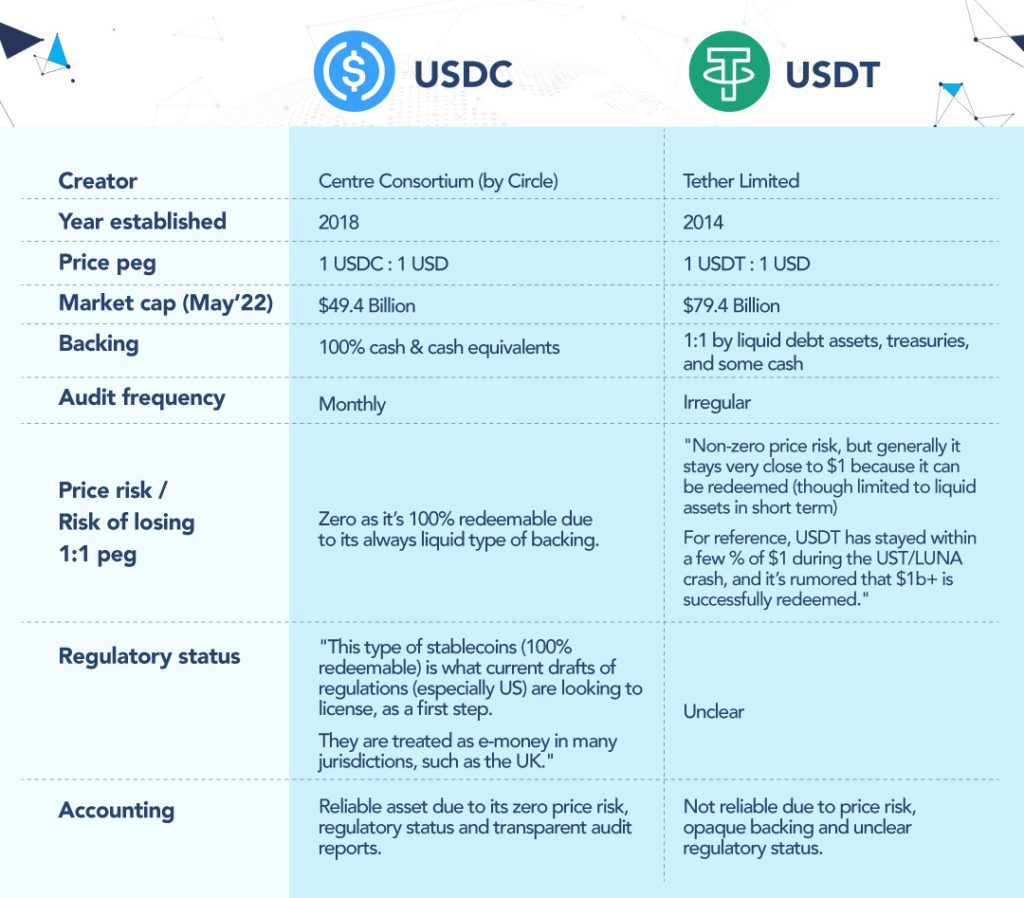
USDC vs USDT: Which Stablecoin Fits Your Business in 2026? - USDC vs USDT: Key Differences at a Glance.
| Feature | USDC (USD Coin) | USDT (Tether) |
|---|---|---|
| Issuer | Circle | Tether Limited |
| Launch Year | 2018 | 2014 |
| Reserve Backing | Cash + short-term US Treasuries | Cash, commercial paper, corporate bonds, other assets |
| Attestation Frequency | Monthly (Grant Thornton) | Quarterly (various firms) |
| Regulatory Posture | Proactive; MiCA compliant | Reactive; not MiCA compliant |
| Market Cap (approx.) | ~$35 billion | ~$110 billion |
| Primary Use Cases | Institutional treasury, DeFi compliance, business payments | Exchange trading, arbitrage, high-liquidity transfers |
Transparency and Audit: Why It Matters for Businesses
USDC vs USDT: Which Stablecoin Fits Your Business in 2026? - Transparency and Audit: Why It Matters for Businesses.
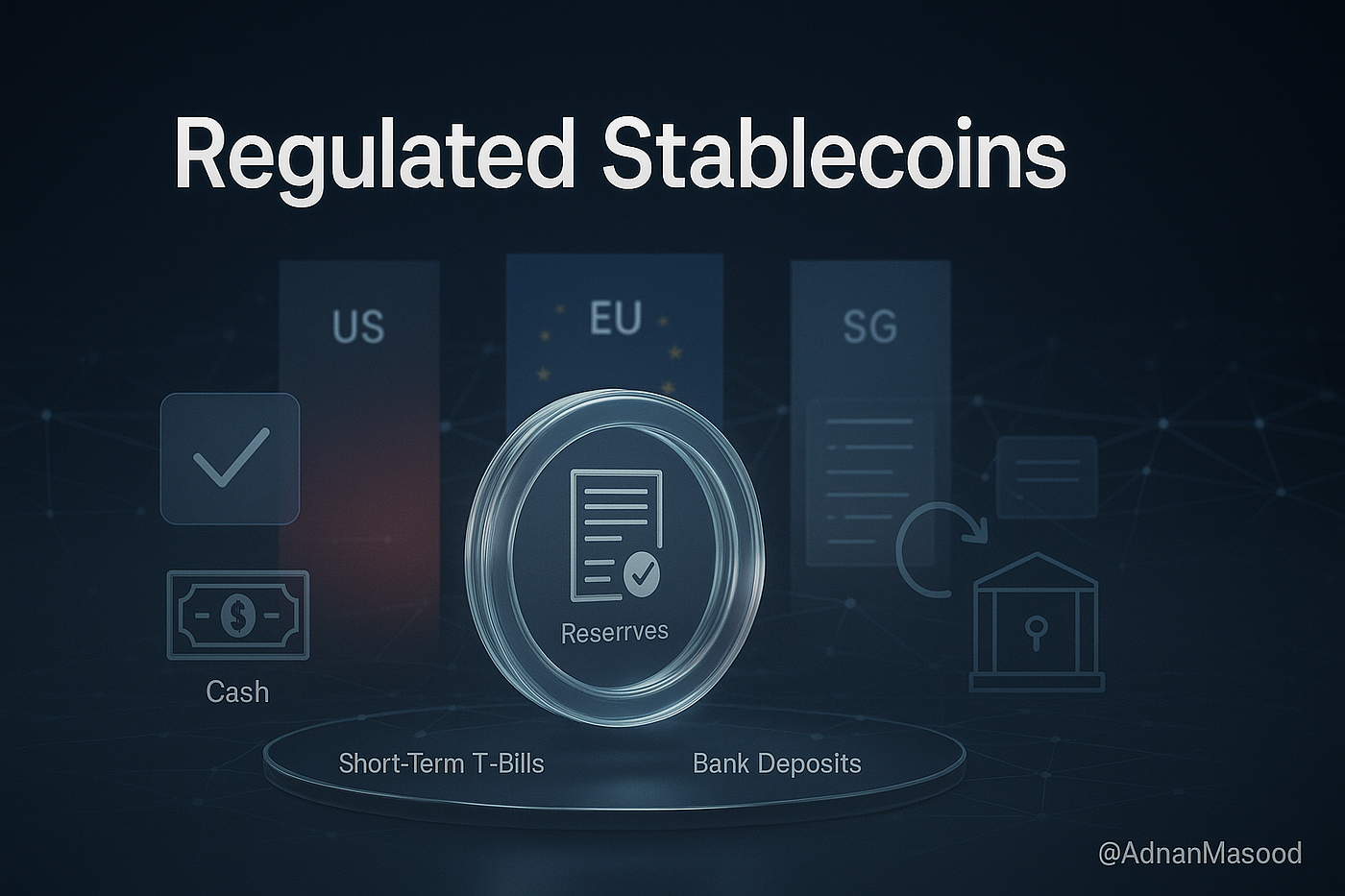
If your company holds a material stablecoin balance for payroll, vendor payments, or operating expenses, reserve transparency isn’t optional—it’s a fiduciary duty. USDC’s monthly attestations and simple reserve composition make it easier to satisfy internal audit requirements and demonstrate sound treasury management to stakeholders.
USDT’s quarterly attestations provide a snapshot, but the broader mix of assets backing Tether introduces incremental risk. During periods of market stress, questions about commercial paper quality or redemption timelines can surface. For a business that needs guaranteed 1:1 redeemability at any moment, USDC’s structure offers more predictable outcomes.
Regulatory Landscape: MiCA, US Frameworks, and Global Trends

USDC vs USDT: Which Stablecoin Fits Your Business in 2026? - Regulatory Landscape: MiCA, US Frameworks, and Global Trends.
Regulation is the single biggest factor reshaping the stablecoin market in 2026. The EU’s MiCA regulation now requires stablecoin issuers operating in European markets to hold specific reserves and obtain licenses. USDC is fully compliant, making it the safer choice for any business with European exposure—whether you’re paying remote contractors in Berlin or settling SaaS subscriptions with a Euro-denominated entity.
USDT has not yet achieved MiCA compliance, and its accessibility within European exchanges is increasingly restricted. In the US, proposed stablecoin legislation favors issuers with established regulatory relationships, again tilting the field toward Circle and USDC.
For businesses that want to future-proof their payment rails, choosing a compliant stablecoin now avoids forced migrations later. This is especially relevant when you’re issuing corporate cards or funding operational accounts that must remain uninterrupted across multiple jurisdictions.
Liquidity and Market Access: Where Each Stablecoin Wins
If your primary need is moving large sums across exchanges quickly, USDT’s liquidity remains unmatched. It dominates trading pairs on international exchanges and is the default quote currency for many altcoin markets. For a crypto-native hedge fund or an active OTC desk, USDT is often non-negotiable.
But for most business spending—paying for Google Ads, AWS invoices, or team travel—liquidity depth matters less than stability and acceptance. USDC is widely supported across payment platforms, corporate card issuers, and DeFi protocols. Its integration with the Coinbase ecosystem also simplifies on/off-ramping for US-based businesses.
Real-World Business Use Cases: Matching the Stablecoin to the Job
Treasury and Working Capital
For companies holding stablecoins as part of their balance sheet, USDC’s transparent reserves and regulatory standing reduce audit friction. If you need to demonstrate to investors or boards that your digital dollars are fully backed by liquid, low-risk assets, USDC is the clearer choice.
Cross-Border Vendor and Team Payments
When paying international contractors or suppliers, speed and cost matter. Both stablecoins settle in minutes on-chain. But if any part of your payment flow touches European entities, USDC’s MiCA compliance eliminates regulatory ambiguity. Platforms like Cardfornia let businesses fund a single account with either USDC or USDT and issue multi-currency virtual cards to teams, so you don’t have to force everyone onto one stablecoin. You choose the asset that fits your treasury, and the platform handles the conversion at the point of spend.
Ad Spend and SaaS Subscriptions
Digital advertising and SaaS subscriptions are two of the most common corporate crypto use cases. Platforms like Meta Ads, Google Ads, and TikTok Ads accept card payments, not direct crypto. Here, the stablecoin you hold matters less than the card infrastructure that converts it. A corporate virtual card platform that supports both USDC and USDT—and provides high-limit cards to reduce ad account bans—gives you the flexibility to hold the stablecoin you trust while spending wherever cards are accepted.
DeFi and On-Chain Operations
For DeFi treasuries, USDC’s deep integration with protocols like Aave and Compound makes it a natural fit. USDT remains widely used in trading pools, but for lending, borrowing, or yield strategies where smart-contract risk is already present, many teams prefer to minimize counterparty risk by using a more transparent stablecoin.
How Cardfornia Bridges USDC and USDT for Corporate Spending
When your business uses Cardfornia to manage operating expenses, you’re not locked into a single stablecoin. The platform accepts both USDC and USDT, letting your treasury team decide which asset to hold based on your own risk and compliance assessment. Once funds are loaded, Cardfornia issues virtual cards that work anywhere Visa or Mastercard is accepted—whether you’re paying for ChatGPT, AWS, or a last-minute flight.
This architecture separates the treasury decision (USDC vs USDT) from the spending execution. If your finance team prefers USDC’s transparency for balance-sheet reporting, you fund with USDC. If your trading desk already holds significant USDT and wants to use it for operational expenses, you fund with USDT. The platform’s automatic multi-currency settlement and real-time exchange handle the conversion at the point of sale, so your team in Manila can spend in PHP while your treasury stays in stablecoins.
For businesses scaling ad spend, Cardfornia’s high-limit virtual cards reduce the account-ban risks that come with using consumer cards on ad platforms. And because client funds are held 100% in segregated accounts with third-party licensed custodians—never lent or invested—the platform’s security model aligns with the transparency principles that make USDC attractive in the first place.
Choosing Between USDC and USDT: A Decision Framework
Ask these questions to decide which stablecoin fits your business:
- Do you operate in or pay entities in Europe? If yes, USDC’s MiCA compliance is a decisive advantage.
- Do you need to satisfy auditors or institutional investors? USDC’s monthly attestations and simple reserve composition make audit trails easier.
- Is your primary need exchange liquidity and trading? USDT’s market depth is superior for active trading and arbitrage.
- Are you holding stablecoins long-term on your balance sheet? USDC’s lower reserve-complexity risk is preferable for treasury holdings.
- Do you need to spend stablecoins via corporate cards? Choose a platform that supports both, so you’re not forced into one asset. See how Cardfornia compares to other corporate crypto card platforms to find the right fit.
Related reading
- How to Use Cardfornia with Coinbase: A Corporate Crypto Spending Guide - Learn how to connect Cardfornia's corporate virtual cards with Coinbase to fund business expenses using stablecoins. Step-by-step setup, workflow, and practical examples.
- Cardfornia vs Request Finance vs Wirex: Which Fits Your Business? - Compare Cardfornia, Request Finance, and Wirex for business spending. See which fits your needs: corporate crypto cards, stablecoin payables, or consumer wallets.
- Cardfornia vs OneSafe: Which Crypto Business Card Wins in 2026? - Compare Cardfornia and OneSafe for corporate crypto spending. See why Cardfornia's stablecoin virtual cards beat OneSafe for ad spend, SaaS, and team control.
Sources and further reading
- Help me understand the USDT vs USDC comparison. - USDC is generally considered more transparent, while USDT carries some audit and reserve risks. For short-term use, both are widely accepted, ...Read more
- USDT vs USDC: A Comprehensive Guide - Discover the pros and cons of USDT vs USDC. Learn which stablecoin suits your crypto accounting needs and how Cryptoworth can help streamline your finances.
- Mural Pay - Global Accounts. Realtime Payments. One API. - Build financial products your customers love while transforming your financial operations into a competitive advantage. Deploy enterprise-grade stablecoin infrastructure with Mural Pay—launch accounts, wallets, and payments in weeks.
FAQ
Is USDC safer than USDT?
Safety depends on your definition. USDC offers greater transparency with monthly attestations and a simpler reserve composition of cash and short-term Treasuries. USDT has a longer track record and higher liquidity but carries more reserve-complexity risk. For businesses prioritizing auditability and regulatory compliance, USDC is generally considered the safer choice.
Can I use both USDC and USDT for business payments?
Yes. Many corporate crypto platforms, including Cardfornia, accept both stablecoins. You can fund your account with the asset you prefer and issue virtual cards that spend in fiat currency anywhere cards are accepted.
Why does MiCA compliance matter for stablecoins?
The EU’s MiCA regulation sets legal requirements for stablecoin issuers operating in European markets. Non-compliant stablecoins may face delisting from exchanges or restrictions on use. USDC is MiCA compliant; USDT is not, which creates risk for businesses with European payment flows.
Which stablecoin is better for paying Facebook or Google Ads?
Ad platforms don’t accept stablecoins directly—they require card payments. The better question is which corporate card platform you use to bridge your stablecoin holdings to ad spend. Look for high-limit virtual cards designed for ad spend to reduce account-ban risks, regardless of whether you hold USDC or USDT.
Has USDC ever lost its peg?
USDC briefly de-pegged in March 2023 after Silicon Valley Bank’s collapse, because a portion of its reserves were held there. The peg recovered quickly after regulatory intervention and Circle’s reserve restructuring. Both USDC and USDT have experienced short-term de-pegging events but have maintained their long-term 1:1 targets.
Conclusion
USDC and USDT both serve as reliable digital dollars, but they’re built for different priorities. USDC leads on transparency, regulatory compliance, and institutional trust—making it the stronger choice for businesses with treasury, audit, and European operational needs. USDT leads on liquidity and exchange ubiquity, which matters most for active trading and markets where it remains the dominant pair.
For corporate spending, the smartest move isn’t necessarily picking one stablecoin forever. It’s building a payment stack that lets you hold the asset you trust and spend it efficiently. Whether you fund with USDC or USDT, the right infrastructure turns your stablecoin reserves into a practical, global spending tool—without forcing a compromise on compliance or control.